
Explainer
Six weeks,
twenty-two thousand people,
and nobody counting.
Cyclosporiasis arrives every summer. This year one of the routine outbreaks got away, and the machinery built to notice had been quietly switched to voluntary.
Why the number is always wrong
The case count you are reading is a photograph of six weeks ago.
The FDA has published the number itself. In a statement explaining why confirmed cases would keep rising even after the recall, the agency said it can take as long as six weeks for the CDC and state officials to determine whether a sick person is part of an outbreak.
So when a federal figure goes up, it is not telling you that more people got sick this week. It is telling you that more people who got sick in June have finally finished the paperwork.
Source: FDA statement, via syracuse.com, 27 July 2026.Why every outlet gave you a different figure
Eight numbers, all correct.
These are not contradictions. They are answers to six different questions, published on different days by different agencies. The confusion is real and it is worth understanding, because it is the reason nobody could tell how big this was.
| Figure | Value | What it actually counts | Source & date |
|---|---|---|---|
| Michigan cases | 11,508 | All reported illnesses in one state, confirmed and unconfirmed | Michigan · 4 Aug |
| Michigan hospitalised | 193 | Admitted to hospital in that state since early May | MDHHS · 3 Aug |
| Hospitalised, national | 517 | Admitted to hospital anywhere in the outbreak | CDC · 4 Aug |
| Lab-confirmed, national | 10,468 | Cases with a laboratory result, federally certified, since 1 May | CDC · 4 Aug |
| Lab-confirmed, a week earlier | 6,707 | The same measure, seven days before. Not a competing figure — an earlier reading of this one | CDC · 28 Jul |
| Confirmed + suspected | 22,000+ | Laboratory-confirmed plus everything still queued or under investigation | CDC · 4 Aug |
| Taco Bell exposures | 1,947 | People who reported eating the implicated lettuce at that chain | FDA · 24 Jul |
| States affected | 45 | Any reported case, including travel-related and unlinked | CDC · 3 Aug |
| States in the outbreak | 9 → 15 | States whose illnesses investigators have formally linked to the implicated lettuce | Wash. Post · 4 Aug |
The trap in this table
Until Tuesday the national lab-confirmed figure was lower than one state's case count. Both were right. Michigan counts reported illnesses; the CDC counts completed laboratory work, and its own page notes that it excludes probable cases while states may include them. If you see two such figures side by side and think one must be wrong, that is the six-week lag showing through.
One contradiction that turned out not to be one
On 4 August two wire versions of the same story carried two different national confirmed totals — 6,707 and 10,468 — three and a half thousand infections apart. We could not reconcile them and said so.
They are the same figure a week apart. 6,707 was the count on 28 July; 10,468 is the CDC’s page on 4 August. Neither desk was careless. The number simply does not carry its own date in a way that survives being quoted, so one reached into the week that had just been superseded and the other into the current one, and a reader had no way to tell which.
Buried inside the confusion was the actual news: the confirmed count rose by roughly 56 per cent in seven days. Not because that many people fell ill that week — because that much laboratory work finished at once, on infections dating back to June and July.

Scale
Michigan normally sees about fifty cases a year.
At its normal rate, Michigan would need more than two centuries to accumulate the caseload it has recorded in about twelve weeks.
Some of that is a genuinely enormous outbreak. Some of it is Michigan doing its job well — the state alerted the public early and pushed providers to test, so it found cases other states are almost certainly having and not detecting. As the Johns Hopkins epidemiologist Dr Caitlin Rivers put it, higher numbers can mean better information, not a worse outbreak.
Which means the states with reassuring figures may simply be the states that did not look.
Sources: Michigan DHHS; Nexstar; Dr Caitlin Rivers on PBS NewsHour, 27 July 2026.The wider picture
The FDA is running twelve foodborne outbreaks at once. Eight have no identified food.
Amber marks an investigation where the source is still listed as not identified. When there is no source, there is no useful instruction — the advice cannot be “stop eating.”
Iceberg lettuce
The main outbreak. Linked to shredded lettuce from central Mexico.
Not identified
Three further cyclospora investigations running concurrently. One added 22 July with 72 cases.
Shell eggs
About 19 million eggs recalled by Midwest Poultry Services across five retail brands.
Not identified
Javiana and Oranienburg strains. 106 and 81 cases respectively.
Frozen blueberries
One lot code, 10 oz organic packages, best-by February 2028.
Not identified
O157:H7, 14 cases, first listed 1 July.
Soft cheeses
Two Latin American–style cheeses recalled in late June.
Not identified
Eight cases, first listed 22 July.
Parents: check this one
The twelfth investigation is Clostridium botulinum in a powdered organic infant formula, sold at Target stores, Target.com and the manufacturer’s own site between July 2025 and June 2026. It has been recalled and the FDA says its investigation is at an early stage. Check the current recall notice.
The disputed part
The fire alarm and the firefighters.
The CDC runs a programme called FoodNet. It is not the outbreak response — it is the measurement layer, the thing that tells you whether a given summer is unusual. Last summer, FoodNet made tracking cyclospora optional, along with Listeria, Shigella, vibrio and Yersinia. Per the CDC via the IndyStar, the programme is no longer required to monitor eight of the ten pathogens it previously tracked. FoodNet was created after four children died of E. coli in the 1990s.
Dan Jernigan, formerly of the CDC, gave the Washington Post the analogy: outbreak investigators are the firefighters at a specific blaze; FoodNet is the citywide system that tracks how often fires happen and whether risk is rising. Removing cyclosporiasis, he said, does not take the firefighters away — it removes the part that tells you how big the problem is.
The government disputes what this means. An HHS spokesperson has said the CDC never stopped monitoring cyclospora and that the administration mounted a robust response without interruption, working with health departments in all fifty states.
Both statements can be true. Making something optional in a surveillance programme is not the same as ceasing to monitor it. The critique is about measurement; the rebuttal is about response.
Separately, and predating this administration: the Government Accountability Office reported that the FDA has not met its domestic or foreign inspection targets since 2018.
What experts say comes next
Prof. Jill Roberts of the University of South Florida told Newsweek that the pathogen she is most worried about is not this one. It is Listeria, which kills as many as 30% of those diagnosed and whose FoodNet surveillance, she says, was discontinued last year. She notes that PulseNet — the CDC network that caught two of the deadliest US foodborne outbreaks — is now under-resourced, as are the state laboratories that feed it.
Her statistical pick for the next big outbreak is norovirus, which accounts for more than half of all foodborne illness. Norovirus season begins in October.
Source: Newsweek, 3 August 2026.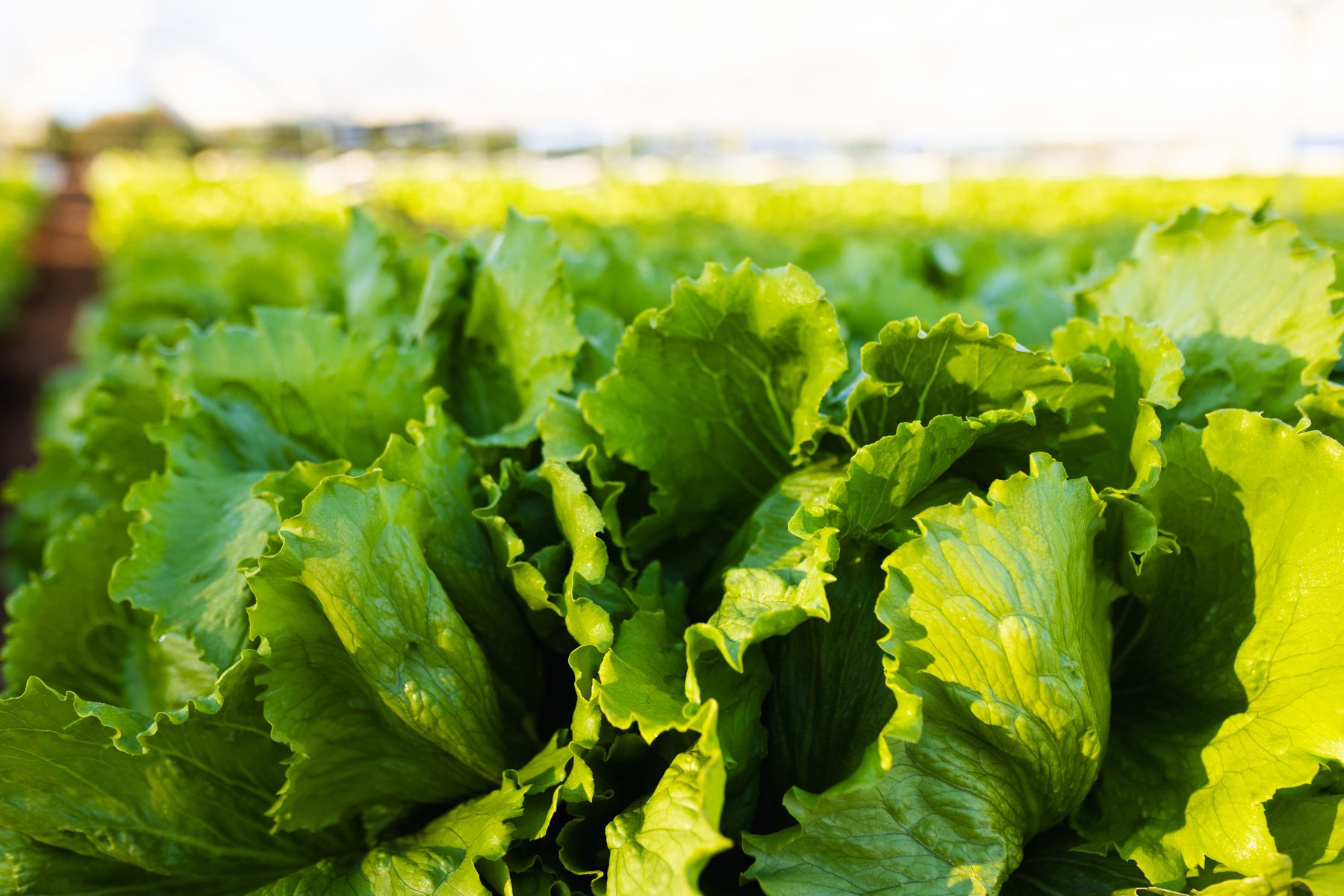
Chronology
Twenty-one days.
The FDA links illnesses to iceberg lettuce served at Taco Bell in five states. The supplier is not named.
Taylor Farms de Mexico recalls iceberg lettuce from central Mexico. Taco Bell says it has completed removal the same day.
The FDA announces a lettuce sample has tested positive for cyclospora.
The FDA says the positive was a false positive, and that the finding “does not represent true amplification.”
The Secretary of Health and Human Services says: “We do have the outbreak under control.” The same day, a statement appears on the Taylor Farms website saying the FDA apologised to the company. The FDA says no apology occurred.
The FDA adds a new, separate cyclospora outbreak to its list. Seventy-two cases. Source not identified.
Former FDA commissioner Scott Gottlieb, on Face the Nation, says a reported approach to the White House was “not standard operating procedure.”
Rep. Robert Garcia, ranking Democrat on House Oversight, writes to the Taylor Farms chief executive demanding all communications with the White House since January.
Forbes counts twelve concurrent FDA outbreak investigations, eight with no identified source. The suspected national case total passes 18,200.
A Salinas Valley farmer ploughs 300,000 pounds of healthy romaine back into the soil. Lettuce sales are down 8.7% year on year.
Not part of this outbreak, but part of the record. Cyclosporiasis sickened 631 people across 25 states; 239 in Iowa and Nebraska were traced to bagged salad mix from Taylor Farms de Mexico in Doctor Mora, Guanajuato. In November the FDA told the company to determine whether Cyclospora was a “reasonably likely food safety hazard” in that growing region, and if so to re-evaluate its wash step.
Michigan confirms two deaths. Both people had significant underlying health conditions. The state says it will release no further details. The FDA notes both had illness onset dates before the 17 July recall.
Taylor Farms sends this programme a statement. It addresses two of the ten questions we asked. Read it in full →
The Washington Post reports that the CDC is expanding the outbreak from nine states to fifteen, adding Arkansas, Iowa, Missouri, Nebraska, New Hampshire and North Carolina, citing people familiar with the investigation who were not authorised to speak publicly. Missouri reports 1,095 cases, roughly double its total a week earlier; its health department says patients interviewed at length reported eating at Taco Bell before falling ill. The CDC has not published the expansion itself.
Sysco, the largest food distributor in the United States, says it has stopped buying iceberg lettuce from Taylor Farms. Chief executive Kevin Hourican tells Reuters the company is not buying it from them and is working to diversify its sourcing; it has switched to American-grown iceberg. He also says that in mid-July Sysco halted distribution and ran a voluntary recall of its own before Taylor Farms notified it of the official recall — his account, in an interview, which Taylor Farms has not been asked to answer. A Sysco spokesperson subsequently narrowed the remark to Taylor Farms product produced in Mexico, and at least one outlet published a correction saying so. None of this is a regulatory finding: no laboratory test has linked any product to this outbreak.
The CDC publishes its own totals: more than 22,000 confirmed or suspected cases and 517 hospitalisations. Its surveillance page shows 10,468 laboratory-confirmed since 1 May and more than 12,255 not yet confirmed or under investigation. The confirmed figure is up roughly 56% on the week before. Michigan reports 11,508 cases, up more than 200 in a day.
The CDC’s outbreak page confirms in writing that the agency is aware of the two Michigan deaths as part of this outbreak. The fifteen-state expansion is still described by reporters as the agency’s planned update rather than a published one.
Document deadlines for two congressional committees.
Little Hill Podcast · Last updated 5 August 2026
Every figure here is attributed on the sources page. Where our sources disagree, we have said so rather than picking a favourite.